If my family was a dog – its breed would best be described as a bitser (definitely not pedigree but consisting of bits of this and bits of that). My heritage consists of Welsh, Irish, Jewish, English (with probably a few other undocumented -ish as well!)
My Mum was the the second youngest of seven children – she had three brothers and three sisters. She was born during WW2 in Bermondsey, London in the house she would grow up in and that my grandparents would live in until the early 1970’s. I often pitied any bloke that showed any interest in my Mum (or my three aunts for that matter), as she had three older brothers who were quite protective of their four sisters.
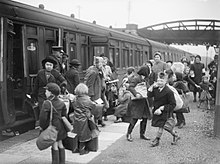
Unlike her elder siblings Mum was never evacuated from London during the war. The evacuation of young children from major urban centres (London being the biggest in the UK) was designed to remove the population from the risks caused by the aerial bombing of cities by moving them into rural areas thought to be safer. The first wave of evacuees left the urban sprawl in September 1939, with a total of over 1.5 million people being relocated (830,000 school aged children, 530,000 young mothers with children under 5 years old, 13,000 pregnant woman as well as over 100,000 teachers and helpers). There were several other waves of official evacuations in June 1940 (coinciding with a predicted land invasion by Axis Forces and involved some 100,000 children), then in September 1940 (at the height of The Blitz involving 250,000 new evacuees) and finally in 1944 (as a result of V-1 flying bombs nearly 1.5 million people left – only 20% of them were official evacuees). My uncles spent a considerable amount of the war in Yorkshire and Scotland billeted to evacuation camps hundreds of miles from home. From September 1944 the evacuation process was officially halted – with people only being allowed to return to London from June 1945 onward. I remember talking to one of my uncles at length about being evacuated and although the passing of many years had perhaps tainted his recollections he talked about it being a bit of an adventure and was certainly less traumatic than huddling in the Anderson Shelter at the bottom of Nan and Grandad’s garden when the aerial bombings were taking place.
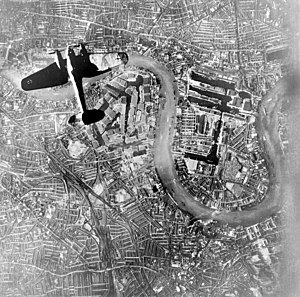
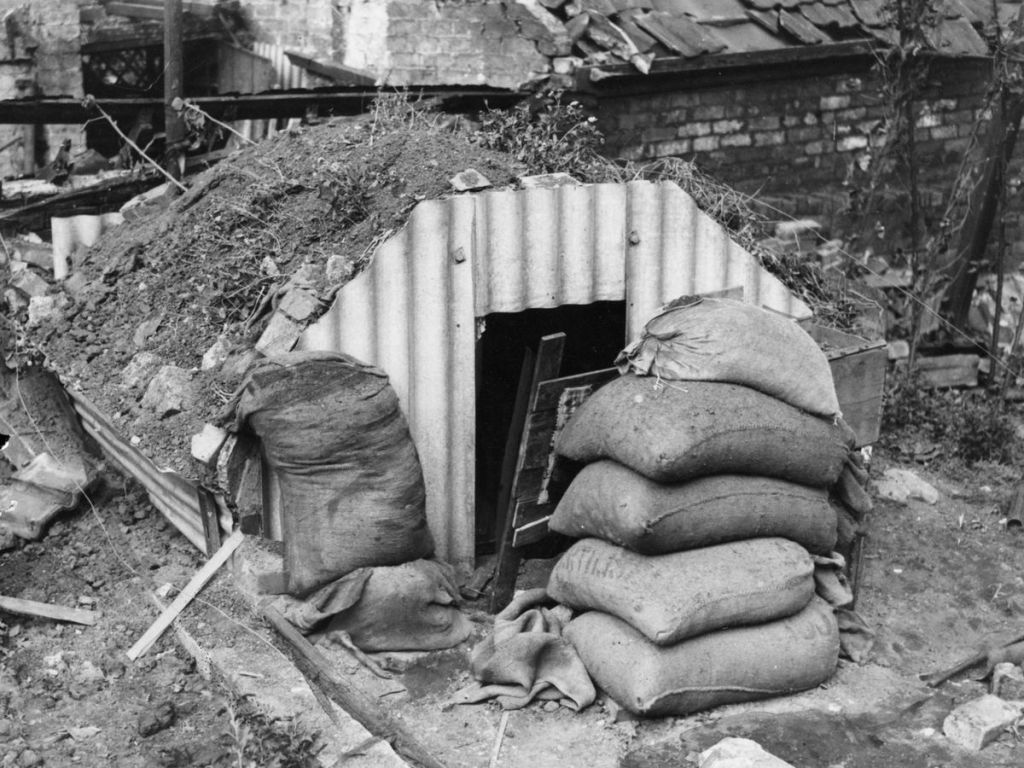
Nan and Grandad’s house was close by to a number of significant enemy bombing targets during the war, including Bricklayers Arms Goods Rail Station and the Surrey Commercial Docks on the River Thames. Bermondsey was once known as “London’s Larder” hosting numerous factories that manufactured a vast array of food products. A lot of these factories had been commissioned during the war by the government to produce munitions and their collection of timber sheds made for a tinderbox ready to be ignited by the incendiary bombs dropped from enemy bombers- a quote by an eye witness after a particularly accurate raid describes a horrific experience – ‘The evening sun had turned blood red before being consumed in thick, black, choking smoke. Deafened, suffocating and grief-stricken, in times of crisis the people of Bermondsey did what they did best; they stuck together’. London weathered 57 consecutive days of bombing during 1940 – and it took nearly 40 years for much of the scars to be healed through rebuilding and redevelopment. Until that time, the craters and eerie bombsites were an amazing playground for the children of Bermondsey – me being one of them.
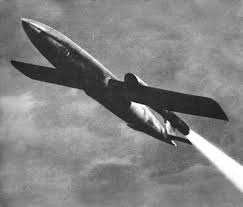
My Nan often told a story when her and a friend were walking home from their cleaning jobs when the unmistakable drone of a V-1 bomber could be heard behind them. The V-1 bomber was a early version of the cruise missile. Nicknamed the “Buzz Bomb, or Doodlebug” it was a pilotless aircraft launched from coastal Europe that had just enough fuel to reach London – on running out of fuel it would descend rapidly, exploding on impact. At its peak more than one hundred V-1’s were launched each day from June to October 1944. On hearing the spluttering sound of the V-1 engine begin to cut out, my Nan and her friend started running away from the Doodlebug, only to be stopped by a uniformed policeman who suggested they stop running as they were heading directly towards where the doodlebug would eventually land. Heeding the Bobbies advice meant they stood and watched as the V-1 sailed over the top of them, eventually exploding several streets away, in the direction the pair were running towards.
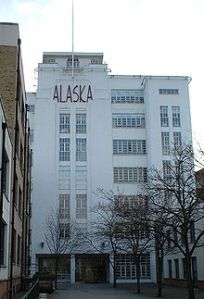
When I was born my Mum returned to work when I was still quite young and my Nan would look after me. I remember going to work with Nan when she did her cleaning rounds quite a few times. She worked at a local fur factory just around the corner from her house. The Alaska Fur factory opened in 1823 and it tanned animal fur, above all seal fur – thankfully by the time my Nan was employed there they no longer processed seal fur, but still processed hides into leather or fur ready for use by a number of “fashion houses” to use. I remember going to the factory and after Nan clocked in would either enter the factory from the left hand side of the main building or the right hand side – both sides connected by a rickety old metal walkway about 30 feet above the road that led to the loading bays. I always preferred going in the left entrance first – this meant following the animal hides on their journey through the factory. The hides came from the various suppliers in a fairly raw state (raw as in lots of raw meat still clinging to the animal hides). The tanning process usually starts with the animal skins being cured – this involves them being agitated in salt water for about 16 hours (a particularly putrid smelling operation). They are then soaked in water to remove any salt content and treated with fungicides to prevent mould growth (another revolting smelly part of the process). The hides were then treated with a “milk of lime” including the use of various additional chemicals including sodium sulfides, cyanides and amines – this allows for the meat and/or hair to be scraped from the hide (depending on if you were working towards leather or a fur pelt) – a process called scudding. The final step for the fur felts was a conditioning stage where the pelts were finished – this part of the factory always smelt awesome, the conditioning chemicals always having a sweet pleasant smell. I used to hate going in the right side of the factory first because I knew I would leave the factory with the disgusting “rotten meat” smell of the fresh pelts (a smell that would stick on you like glue). Much better to start with the foul smell and end with the sweet scent of finished pelts as your lasting reminder of the time in the factory.
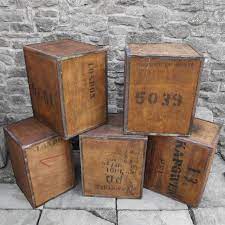
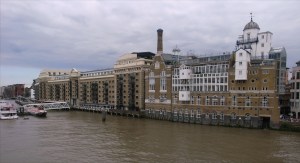
Nan also worked at the Empire Tea Company on Tower Bridge Road. Tea clippers were a common sight along the banks of the River Thames in the late 1800’s and would deliver tea from China to the huge warehouses that were close neighbours to Tower Bridge. These were slowly replaced by more modern ships, but the demand for tea was huge in Britain and Butlers Wharf was the end point for many a long journey for the tea chests of China. I still can’t open a tin of tea without thinking of my Nan- it takes me right back to when she cleaned the offices of the warehouses which contained thousands and thousands of tea chests – the strong waft of tea leaves was overwhelmingly strong and the smell of tea has a physical and emotional affect on me to this day. Tea is seen as a bit of a cue all in the UK with approximately 100 million cups consumed each and every day.
A lot of smells remind me of my Nan. I remember her walking me home from Nursery (Kindergarden/Pre-School) and I must have been a bit of a grot, because everyday she would spit on her hanky and rub my face clear of whatever leftovers I had still smeared on it. The smell of her saliva was very strong. My favourite lunch at her house was Cream of Mushroom Soup – which she always added some boiled potatoes to, loved that so much. I remember once she asked me to empty the tea pot onto the back garden of her house at Setchell Road – it was freezing outside and I just tipped the pot out onto the ground near the coal shed. When I returned I felt a bit guilty and tried to shift the blame for the big wet patch from myself to Scruff the dog peeing. About 30 seconds later I remember getting a clip around the ear and a reminder that “dogs’ pee doesn’t usually have tea leaves in it”, didn’t do that again.
Nan lived well into her 90’s and was a very independent and active woman in her later years. She traveled solo to Australia to visit us on a number of occasions, loving nothing better than sitting in the garden soaking up the sun’s rays. I loved my Nan, writing this has me tearing up thinking about this amazing woman and the influence she had on my life. She was such a “no bullshit, love you unconditionally, will always be there for you” person that left a huge hole in my life when she passed away.
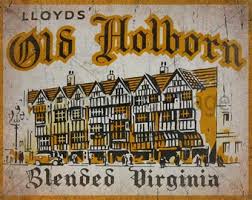
My Grandad worked on the railways during the time I knew him. He was a quiet bloke, who commanded a lot of respect from family and friends. He was a man’s man who smoked roll up cigarettes (Old Holborn Blended Virginia Tobacco, Rizla Paper) and liked nothing better than to have a few pints at his local pub – The Alscot Arms. I remember returning to London in my early 20’s and visiting the Alscot Arms, My grandad had passed away some years earlier and I was amazed to see a little plaque that said “Bill’s Corner” right where I remember him seated for many a session “on the hop”. I mentioned to the landlord that Bill was in fact my grandad and to my great surprise didn’t have to pay for a drink for the rest of the night – a night where the wobbly boots were certainly being worn as I walked back to Nan’s house.
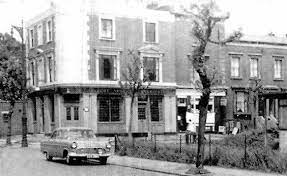
I remember a few things about my Grandad in particular. His nicotine stained fingers, his soft Harris Tweed cap, his one long tooth that used to scare the crap out of me, his company when I would watch Doctor Who and hide behind the sofa (only being encouraged by him to come out when the coast was clear of Daleks, Cybermen or whatever alien the Doctor was battling at the time).
Grandad was a typical Londoner male of his era. Swearing was a fairly common thing to do around friends and family, but there were two words he would never use and would chastise anyone saying them in his presence, “Bugger and Sod” – this spoke of the upbringing he had more than anything – but everyone who knew him knew to never use these words around him.
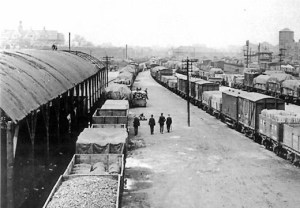
My Grandad worked for British Rail for a large portion of his life. He worked into his 70’s with them – finishing his career in the gate house of the goods yards along Lynton Road in Bermondsey. Earlier on in life he worked for The Courage Brewery, driving a horse and dray, to deliver the highly sort after amber fluid to the many pubs in the area.
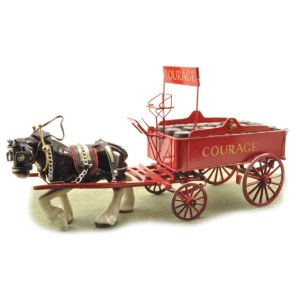
The hops used by the Courage Brewing Company were most likely picked by local residents of Bermondsey. During the late 19th Century and early 20th Century up to 40,000 London residents would have a hop picking “holiday” in Kent during Autumn. Hops are used in the brewing of beer – they put bitterness and character into a beer. Without them, beers would be overwhelmingly sweet (because of the malts), so hops add a balance of aromatic herbs and spice. Before mechanisation hop picking was a hugely labour intensive process. Hop growers needed extra labour and the help came in the form of Londoners who would arrive in Kent during September to pick hops – for many it was a working holiday with whole families and extended families travelling together to toil amongst the hop vines. Mum often reminisces about her hop picking adventures with her family.
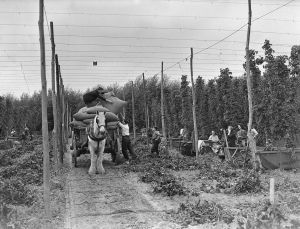
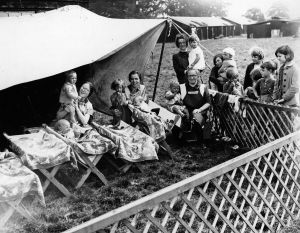
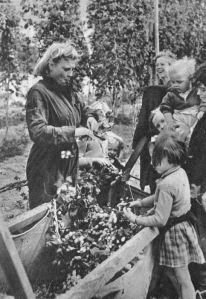
Interestingly, most of the hops ended up at huge hop warehouses not far from where Nan and Granddad’s house was. The area around Guys Hospital had so many hop warehouses that when telephone dialing codes were introduced to London, the three letter code for the area was HOP – for example Guys Hospital’s phone number was ‘HOP 7600’ – the code lived on for a while in the equivalent ‘407’.
My Grandad passed away in his early 70’s. One of the family stories that often gets told about Grandad is that as he grew older, he would often comment that he desperately wanted to outlive his Mum – which he did, but only by a matter of weeks. My Nan once told me one of the most heart breaking things anyone has ever said to me – I remember it clearly. We were sitting in her small kitchen and talking about Grandad, I would have been about 19 at the time and visiting from Australia – she looked me eye to eye and said “when your Mum took you away to Australia – that was the death of your Grandad” what do you do with that????? We left England late 1977 and Grandad passed way in 1980.
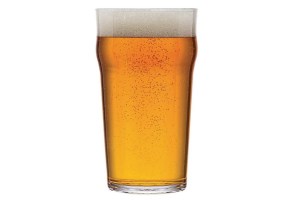
I’m off to have a beer and toast my amazing Grandparents – maybe you should too. If you are fortunate enough to have them still in your life, give them a call right now or go around for a visit. If they have passed away take a few seconds to reflect on how grateful you are for having them in your life when you did. If my Grandad were still alive he would be having a pint of Courage Best Bitter and a single malt whisky chaser. My Nan wold be having a pint of Guinness followed by a brandy (her tipple every night before going to bed).
Till next time …..
 Big Dopey Old Bloke
Cheers 🍻
Hope you are recovering well.
LikeLike
Back to full strength now thanks Jeff! Cheers mate🍺.
LikeLike
You paint a vivid picture of your grandparents, an enjoyable read.
LikeLike